12th Sunday in Ordinary Time, Year A

(Jer 20: 10-13; Ps 68(69): 8-10.14.17.33-35; Romans 5: 12-15; Matthew 10: 26-33)
About 600 BC Jeremiah counselled King Zedekiah to be conciliatory towards Babylon, ruled by Nebuchadnezzar. Jeremiah expresses his internal doubts but concludes that the Lord is indeed on his side, and asks that he will see his persecutors punished. Against Jeremiah’s advice, Zedekiah revolted, Jerusalem was destroyed and the people led into exile.
The Psalm implores God to save him from unmerited suffering. The reference in an omitted verse to “vinegar to drink” and the expectation that “God will save Zion” led Christians to think of Messiah – Christ.
In his letter to the Romans Paul reflects on the redemptive mystery of Christ. Sin, the dreadful power that has gripped humanity from the beginning, causes both bodily and spiritual death. Like Adam, all people pursue their own desires in opposition to God’s will. But God’s free gift of grace makes life available to all.
In Matthew’s gospel Jesus has described the trials the newly commissioned Apostles will face in their mission. They will be persecuted and even betrayed by members of their families. But they should “not worry about how they are to speak” in front of judges. They “will be given at that moment” what they are to say. Today’s reading insists they can have complete confidence in God and must not be afraid.
(Jer 20: 10-13; Ps 68(69): 8-10.14.17.33-35; Romans 5: 12-15; Matthew 10: 26-33)

People Helping People Street Party (Arraial)


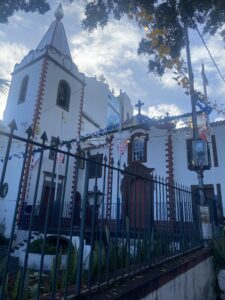
On Saturday and Sunday, 7th and 8th June, the third “People Helping People” arraial was held on the street along side the Penha da França chapel. The objectives of the function were to raise funds for the charity, dispense information about the charity to interested people attending, and generally to build a community spirit amongst the regulars at the English Mass and the organisers of the charity which was initiated by Father Bernardino Andrade, to help the most needy and marginalised in our society.

As in the previous years the food was offered for a voluntary donation, and our chairman, Alexandre Silva (who is also Father Bernardino’s grand nephew), made a wonderful effort in approaching various firms asking for their help.

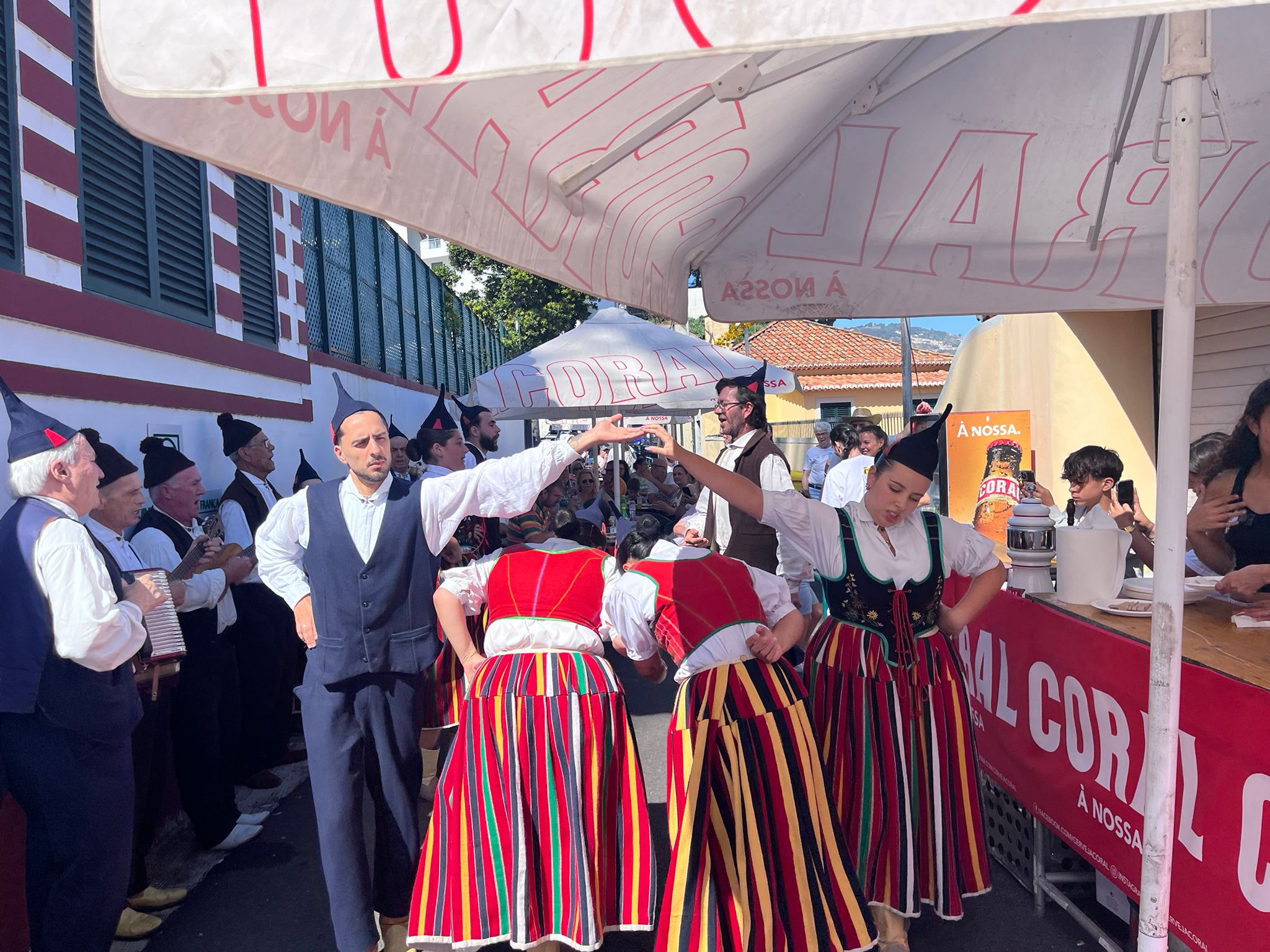
The event was well attended by both locals and tourists alike, and there was much convivality between people who hadn’t know each other previously. Money was collected via the selling of drinks, raffle tickets and an auction of three crucifixes generously made and donated by one of our community Albert de Nobrega.

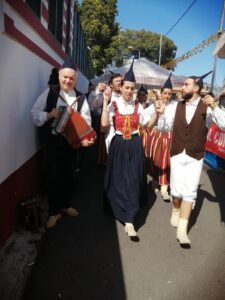
The Grupo Folclórico e entnográfico da Boa Nova performed folk dancing.

We are indebted to the following businesses and donors without whom this event would not have been possible:
* Albert de Nobrega * LuxStar (lighting) * Vario sport * Restaurant Moynihans * Restaurante Casal da Penha de França * Hotel Quinta da Penha de França * Faria & Filhos (and their team) * Enomania * Xavelha wines * Justino * Henriques e Henriques * Barbeito * Libargel * ECM (Empresa Cervejas da Madeira) * Madeira Cash * EEM (Empresa Eletricidade da Madeira) * Junta de frequesia da Sé * Funchal City Council

11th Sunday in Ordinary Time, Year A

Exodus 19: 2-6; Psalm 99(100): 2-3.5; Romans 5: 6-11; Matthew 9: 36 – 10: 8

After escaping from Egypt and journeying for three months through the desert, the Israelites arrive at Sinai where God offers the covenant. Israel is invited to be his people, given special protection. In return they are to be “a kingdom of priests, a holy nation”. The whole people are set apart to be intermediaries between God and the whole of mankind, taking knowledge of the one true God to all peoples.
The psalm sings joyfully of God while entering his temple: “he made us, we belong to him”.
Our readings from Paul’s letter to the Romans continue with this dense statement of the doctrine of atonement. God is not an offended deity to be appeased by his son’s sacrifice. “God proves his love for us in that while we were still sinners Christ died for us.” God and Christ worked together to enable mankind to be “at one” with them. And now that we are reconciled “we will be saved by his life”, our new life in Christ, “the love of God poured into us through the Holy Spirit that has been given to us.”
After more healings, Matthew’s gospel tells how Jesus went round “teaching in their synagogues, proclaiming the gospel of the kingdom, and curing every disease and illness”. For the enormous task of spreading the gospel, he appoints 12 Apostles and gives them their mission. Jesus’ ministry was almost entirely limited to Israel, and initially the Apostles are similarly restricted.
(Exodus 19: 2-6; Psalm 99(100): 2-3.5; Romans 5: 6-11; Matthew 9: 36 – 10: 8)

Holy Trinity (Year A)

Ex 34:4-6,8-9; Dan 3:52-56; 2 Cor 13:11-13; Jn 3:16-18

Seeing the Israelites dancing round the golden calf, Moses was angry and had thrown down and broken the tablets on which the Lord had written his covenant. The agreement with God was literally broken!
Now the Lord, a God of compassion, tells Moses to prepare two more tablets. After “passing before” Moses, the Lord declares that He is “a God merciful, … forgiving iniquity”. Moses asks the Lord to forgive his people, and the Lord re-affirms his covenant and again writes the Commandments on stone tablets.
Today’s Psalm comes from the hymn of thanks in the story of Daniel, set in the 6th century BC but probably written about 165 BC. Daniel’s three companions refused to worship King Nebuchadnezzar’s statue and so were thrown into a furnace so hot their guards were killed. But God protected the three men, who walked about inside the furnace with their clothes intact but their rope bindings burned off.
After Paul’s stern instructions to his beloved Corinthians, his second letter ends with this fond farewell, including the Trinitarian grace used widely by Christians.
At the beginning of John’s Gospel, after the wedding at Cana and the cleansing of the Temple, Jesus tells Nicodemus he must be “born again”. Nicodemus cannot understand this, but Jesus insists that those who refuse to believe and trust in Jesus condemn themselves.
(Ex 34:4-6,8-9; Dan 3:52-56; 2 Cor 13:11-13; Jn 3:16-18)

Pentecost, Year A

Acts 2:1-11; Psalm 103(104); 1 Corinthians 12:3-7,12-13; John 20:19-23

Pentecost was less understood by Christians than the other two Jewish pilgrimage feasts of Passover and Tabernacles. Then the Dead Sea Scrolls showed that Pentecost was associated with God giving the Covenant on Sinai, and enrolling new community members. The coming of the Holy Spirit on the Apostles fits neatly with this Covenant feast.
The Psalm calls us to praise God’s creative wisdom. Filled with wonder at the details of God’s glorious works, this psalm is well worth reading in full.
Acts tells us that they “had all met”, including Mary the mother of Jesus, and his brothers. Wind and fire remind us of Sinai. The list of peoples who hear is effectively the programme for the mission now starting.
After rebuking the Corinthians for their factions and giving us the earliest description of the Eucharist, Paul shows how Christians together make up the one body of Christ on earth. It is the one Spirit who gives the gifts each of us needs for the particular task God has given us.
In the first ending of John’s Gospel, Jesus appears to Mary Magdalen after his resurrection, and then to the disciples together in a closed room “for fear of the Jews”. Jesus breathes the Holy Spirit on them, sending them on mission with power to forgive sins.
(Acts 2:1-11; Psalm 103(104); 1 Corinthians 12:3-7,12-13; John 20:19-23)

Ascension, Year A

(Acts 1:1-11; Psalm 46(47); Ephesians 1:17-23; Matthew 28:16-20)
Luke’s Gospel opens in the Temple in Jerusalem with the angel appearing to Zechariah, and ends, after the ascension, with the disciples joyfully praising God in the Temple, still in Jerusalem. Acts starts with Jesus’ appearances over 40 days and his ascension, but finishes in Rome. This “double ascension” links Jesus’ ministry “to the lost sheep of Israel” with the apostles’ witness “to the ends of the earth”. Jesus’ restored kingdom will be his continued presence on earth in and through the witness of his people, the Church. Jesus promises he will return to the Mount of Olives, where the Jews expect all the nations to stream for the Lord’s return at the end of time.
The Psalm calls on all peoples to accept God as the true God and as universal king.
Paul opened his letter to the Ephesians by reminding them that God has made known to us the mystery of his plan “to unite all things in Jesus”. He then prays that they may know the hope – ie confidence – that this revelation gives us.
Matthew’s Gospel ends with Jesus commissioning the Apostles to “make disciples of all the nations”. Both Luke and Matthew, writing about 40 years after the Ascension, emphasise that Christians are to show their commitment by being baptised.
(Acts 1:1-11; Psalm 46(47); Ephesians 1:17-23; Matthew 28:16-20)

6th Sunday of Easter, Year A

After Stephen had been killed, Saul led “a great persecution” against the Church in Jerusalem. The Hellenists were therefore driven out of Jerusalem and Philip takes the gospel to Samaria. Peter and John came to investigate these first non-Jew converts. The apostles confirmed these new members by laying hands on them and they received the Holy Spirit.
The Psalm praises God’s power as revealed throughout history but especially during the Exodus.
Peter continues his advice to Christians suffering abuse and ridicule from their non-Christian neighbours. Do not be afraid! Stick to your principles, being ready to explain your reasons politely. And rejoice that your sufferings enable you to share in Christ’s sufferings so that you may share in his glory.
In John’s Gospel description of the Last Supper, Jesus promises to send the Holy Spirit to continue his work after he returns to his Father. The supper ends with Jesus’ great prayer to his Father for the Church he is leaving behind. All three persons of the Trinity are mentioned in the gospels, but the Church only gradually developed its understanding of the Trinity over many centuries. We believe that the Spirit proceeds from the Father and the Son (filioque). The Orthodox Church says that the Spirit comes from the Father through the Son.

4th Sunday of Easter, Year A

Acts 2:14,36-41; Psalm 22(23); 1 Peter 2:20-25; John 10:1-10

Last Sunday we heard the middle section of Peter’s speech at Pentecost, saying the Resurrection shows Jesus was the Holy One expected by King David. Today the consequences: many of his hearers accept this and are told they must repent and be baptised. “Repent” in the sense of radically changing their life and directing it towards God. Even though Jesus does not appear to baptise during his lifetime, baptism is immediately the mark of membership of the new Christian community, at which they receive the gift of the Holy Spirit.
The Psalm celebrates God’s loving care for his people, like a shepherd guarding and guiding his flock, who are looking forward to his generous end-time feast.
Peter’s letter continues: God’s approval comes not from justifiable punishment but from suffering patiently even when we have done right. Christ patiently bore for us unjustified insults and hurts without retaliating, trusting completely in his Father. We must imitate the Lord our shepherd in every way, placing all our trust in him. He will “give us comfort” and “repose”.
In the Gospel John also sees Jesus as the Good Shepherd. He knows each one of us and leads us. We follow him because we know his voice. He is also the gate, through which we can enter and find safety.
(Acts 2:14,36-41; Psalm 22(23); 1 Peter 2:20-25; John 10:1-10)

3rd Sunday of Easter, Year A

Acts 2:14,22-28; Psalm 15(16); 1 Peter 1:17-21; Luke 24:13-35

Today and next Sunday we hear parts of Peter’s speech at Pentecost. Peter emphasises that Jesus’ death was part of God’s plan, quoting the prophet Joel’s words about the wonders expected in the last days, when God’s Spirit will be poured out on all peoples. Jesus, a descendant of David is this expected “Anointed One”, “Messiah” in Hebrew, “Christ” in Greek, who now rightfully succeeds David as King of Israel.
The Psalm, attributed to King David, expresses total confidence in God, who will not let his soul die and will not let “your faithful one” suffer corruption in the grave. Both Peter, in today’s reading, and Paul saw this as referring to Christ’s resurrection.
Peter’s first letter reminds us of the price Jesus paid for our salvation in his suffering and death, so that we might “have faith and hope in God”. We should persevere in hope, in face of attacks and attractions of secular society.
In the Gospel Jesus appeared to the women. Then he joins two disciples walking despondently to Emmaus, and explains the scriptures to them, before they recognise him “at the breaking of bread”. The appearances of Jesus after the resurrection invite us to listen carefully: he was clearly bodily present, not just a spirit. Yet he was different, and could only be recognised with faith.
(Acts 2:14,22-28; Psalm 15(16); 1 Peter 1:17-21; Luke 24:13-35)

Palm/Passion Sunday Year B

Is 50:4-7; Ps 21(22); Phil 2:6-11; Mark 14:1 – 15:47

Second Isaiah was writing during the exile of the Israelites in Babylon after Jerusalem was destroyed. The people are discouraged, in despair, and tempted to give up their faith in God. In today’s ‘servant-song’ Isaiah offers consolation, recommending non-resistance and trust in the Lord.
Isaiah’s words express our horror at the way Our Lord was treated. But, trusting confidently in his Father, Jesus “sets his face like flint”, even though it is covered with spittle.
The Psalm moves from this mood to express unshaken faith, praising God for our redemption and the promised conversion of all peoples.
The hymn in Philippians rejoices that – unlike Adam – Jesus did not seek to be equal to God. But God raised him high, so that all creation should “acclaim Jesus as Lord, to the glory of God the Father”.
Jesus at before Passover, when Jews celebrated their freedom from slavery. The soldiers, the Jewish leaders, the inscription on the Cross, all ironically give Jesus his true title of “King of the Jews”, the Messiah, who frees us from death. When Jesus dies, the first human being in Mark’s gospel to recognise Jesus as “Son of God” is a Gentile, the centurion. All the disciples had run away when Jesus was arrested. Only some women watched, and they saw where he was buried.