FROM MY HEART TO YOUR HEART – Ants, Firemen and The Good Shepherd

ANTS

My niece, Romaninha, came from Brasil to spend some time with me in California. One day I «caught» her in the patio, seated on the pavement and playing with ants. She was already an adult, a matured woman, married and mother of two children. She felt a bit embarrassed because she felt that she had been «caught» doing something very childish. What was the game? The ants were forming a long long line as they usually do. They always communicated with those that were walking in a different direction, as they always do. And my niece’s game was to put obstacles in their path to divert them from their destiny.

She tried little rocks, little sticks, bigger rocks and bigger sticks but nothing worked. The conclusion was that if you want to divert ants from their destiny you have to kill them. Death only.Nothing else works. They have a goal, and they get the support from one another and always try to overcome any kind of obstacle. They have a goal and are willing to give their lives to achieve their goal. Death only can stop them.

FIREMEN
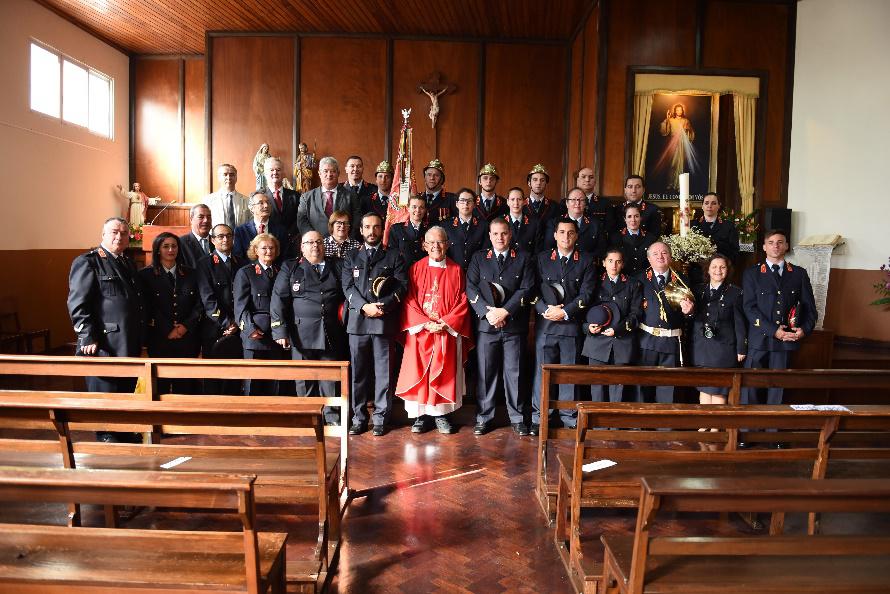
Bernadino_firemen

Last week (24/11/2018) I had the privilege of being invited to say a special Mass for, and with, the firemen of Funchal. I reflected with them about their job. And how much inspiration I get from them in my life. I compared them with the «normal» institutions. I told them different stories of different institutions and compared it with their stories.

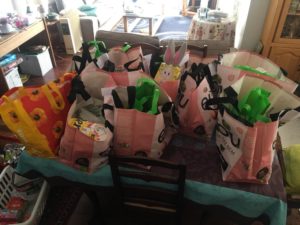
A mother of a large family was called by a special institution to go there to pick up some food that had been reserved for her family. Of course the institutions don’t provide transportation even if they know that the poor have no transportation. Margaret (not her true name) asked Dalila (her true name) for a lift. Dalila went to help Margaret. When they arrived, there were five bags of food waiting for them at the institution. Margaret was very happy. Meanwhile the institution had the obligation of checking for crossing information. Yes. Margaret was caught. According to the rules of this institution Margaret was a cheater. Another institution, the week before, had given to Margaret’s family, some money.

According to the rules of the institution that was enough probably for the rest of their lives. According to them Margaret was a cheater. According to them, she was taking advantage from two different institutions. The five bags of food were left on the floor. Dalila and Margaret and her little son, Cristiano, left with their empty hands, their empty stomachs and their empty souls. On their way home, Dalila called me and invited me for a cup of coffee. I went for a cup of coffee. We offered Margaret and her son something to eat.

I will never forget this scene:

Cristiano grabbed the glass of milk and a pastry we had ordered for him and he didn’t «drink» the milk or «eat» the pastry. Cristiano devoured everything almost without breathing. He was so hungry and so skinny. But the institution hadn’t ask them if they were hungry. Instead they had asked a cold and cruel computer.

Recently we accompanied to an institution, a lady who had arrived from Venezuela where she had had everything. She came to an Island where she has nothing. We just asked for some food. The social worker was very kind, which is not usual. When we finished the conversation, I was expecting some food that they had in abundance. To my disappointment what we brought from that institution was a list of documents that the lady was supposed to present to see if she qualified for help!

I had thousands of stories like this to tell the firemen.

Then I told them some stories about firemen and compared it with the institutions.

When firemen are asked for help they don’t ask who owned the knife or the pistol, who started the fight, who lit the fire, who was over speeding. They don’t even ask for their names or any documents. The only questions they ask are: «Where is it hurting? Where is it bleeding? What is broken? How can I help you? How can I help to alleviate your suffering?
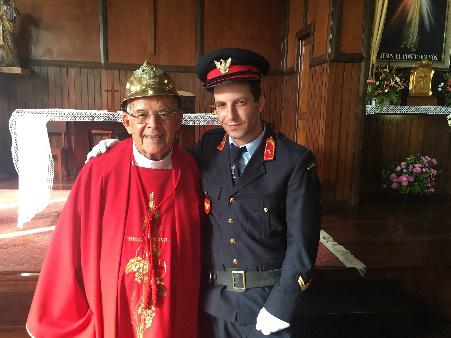
b_firemen2

THE GOOD SHEPHERD

For me the story of the Good Shepherd is, like the story of the Prodigal Son, (Luke 15) a Gospel inside the Gospel. The Shepherd was taking care of one hundred sheep. One got lost. He leaves ninety nine and goes looking for his lost sheep. When He has found it he lays it on his shoulders and rejoices and tells his friends and neighbours, saying to them: «Rejoice with me for I have found my sheep that was lost». He does not ask for papers, for documents or the reasons why the sheep got lost. No questions asked. Just love transformed into service.

Mother Teresa says that «when we start by judging we have no time to love».

********

ANTS, FIREMEN AND THE GOOD SHEPHERD have been for me the greatest inspirations of my life. With ANTS, I have learned to have a vision and never quit even if I have to give my life for it. «Don’t start quitting… Never quit from starting», It’s the name of a book. With FIREMEN, I have learned to help people without judging them.
With the GOOD SHEPHERD, I have learned to reach out for everyone with a special preference for the lost, the least and the last.

Love and Peace,
Fr. Bernardino Andrade
Scripture Readings 9th December 2018, 2nd Sunday of Advent, Year C

Baruch 5: 1-9; Ps 125(126); Phil 1: 3-6. 8-11; Luke 3: 1-6

The Book of Baruch, was probably written during the second century BC and attributed to Jeremiah’s secretary. It deals with problems of Jews permanently exiled in the diaspora. Today’s reading offers consolation for refugees, seeing hope for Jerusalem as the mother of all exiles. Realistically it insists that we must come to terms with life where we are. In all ages, families living in exile must find salvation from the living word of God.

The psalm is usually seen as Israel’s rejoicing after their return from exile. But it may be more consistently read as an intense visualisation of the future restoration of Israel by the Lord.

Paul wrote the Letter to the Philippians from prison between 55 and 63 AD, addressing it to the “saints, bishops and ministers” of the community. He prays lovingly that their love and knowledge of Christ may increase, so that they dare to proclaim the gospel fearlessly.

For these 3 weeks of Advent we hear from Luke’s gospel about preparations for the coming Messiah. Today John the Baptist is positioned in history, proclaiming a baptism of repentance and, like Baruch, quoting from Isaiah. Just as with Elizabeth’s greeting on the last Sunday of Advent, Luke firmly links the coming birth to the Old Testament, which it fulfills.

Psalm Response: What Marvels the Lord worked for us! Indeed we were glad.

(Baruch 5: 1-9; Ps 125(126); Phil 1: 3-6. 8-11; Luke 3: 1-6)

FROM MY HEART TO YOUR HEART – Christ The King And My Humble Confession

– Brought to you by Fr. Bernardino Andrade (bernardinodandrade@gmail.com)

1.
One day I was having a conversation with a friend of mine when he told me: “I am a good Catholic but there are many things in the Catholic Church that I don’t like and I don’t agree”. My answer was: “Welcome to the club. I am trying to be a good Catholic Priest, but there are many things in the Catholic Church that I don’t like and I don’t agree. I think that if you made a list, my list would be longer than yours.” But She (The Church) is my mother and I am passionately in love with her. There are many things in my family and in my country that I don’t like and I don’t agree, but my family is my family and my country is my country and I love them. And the curious aspect of this love affair is that the more I love my family and my country and my church, the more I love other churches, other families and other countries.

2.
Today (Nov. 25, 2018) the Church is celebrating the Feast of Christ the King. I like the idea of celebrating the Feast of Christ the King. Actually, becoming a King is part of the ritual of our Baptism when the Priest anoints us with the oil of Chrism and says: “As Christ was anointed Priest, Prophet, and king, so may you live always as a member of his body, sharing everlasting life” (Ritual of Baptism).

3.
Now my confession. I always feel uncomfortable with the way this characteristic has been interpreted by the life of my Church. Portugal has 33 Kings, and 2 Queens, in its History books. In my school book of the history of Portugal there was a picture of each one of them. All of them very sombre-looking, with a golden crown on their heads and a sceptre in one hand. The lives of many of them were involved in wars against other nations. They had many things in common and one of them was power over all the people. They used their power to do lots of good things but they also used their power to oppress people and cause bloodshed.

4.
The Catholic Church instituted the Feast of Christ the King in 1925. I think it was a great idea. However, every time I see a statue of Christ the King it looks exactly like the statues of the Portuguese Kings: a crown on His head, a sceptre in His hand, strange garments and very sombre. They really look like the figures I used to see in my school books. I really didn’t like them. Actually comparing them with what the Gospel says about authority and power they look ridiculous and don’t inspire me to be a Jesus follower. And I am afraid that worshipping a king according to the world’s values, the church is supporting power like the world sees it. Recently, Brazil elected Jair Bolsonaro to be its president. Before the elections, somebody said that if Bolsonaro was elected it would be a tragedy for the world, and for Brazil of course. He used the Bible and his church to implement his ideas.

After he was elected, it was said that the person that was more insulted in his campaign was God. He used God and His Word to propagate his diabolic ideas. And he won. God was the loser. And when God loses, all the people lose.

5.
For me, the true images that express the Kingship of Jesus, and inspire me, are:
Jesus the Good Shepherd (Lk.15: 3-7), Jesus washing dirty feet (Jo.13:4-15), Jesus touching an unclean and dirty leper (Mk.1:40-45), Jesus embracing children (Mk.10:13-16) and finally a bloody body crowned with a crown of thorns (not gold) and mocked at the cross (Mat. 27:27-56). Actually I prefer what Jesus says about power and authority. «You know that among the Gentiles whom they recognize as their rulers lord it over them, and their great ones are tyrants over them. But it is not so among you: But whoever wishes to become great among you must be your servant, and whoever wishes to be first among you must be slave of all. For the Son of Man came not to be served but to serve, and give his life a ransom for many». (Mk. 10: 42-45).

One of the recent books of Pope Francis has the title of «The True Power is to Serve»
Love and Peace, Fr. Bernardino Andrade

Scripture Readings 2nd December 2018, 1st Sunday of Advent, Year C

Jeremiah 33:14-16; Ps 24(25); 1 Thess 3:12 – 4:2; Luke 21:25-28, 34-36

A few weeks ago we heard Jeremiah promising the deliverance of his people. This week he describes how this hope will be realised, even though Jerusalem and the Temple had been destroyed. A descendant of David will bring honesty, integrity and security to Israel.

Jeremiah’s complex writings changed Jewish expectations from a single Day of Judgement to a gradual process: an initial time of suffering, then an in-between period. This was identified by early Christians as now, after Christ’s death had inaugurated the New Covenant, while we await the promised completion in Christ’s second coming.

These rather mild verses from the psalm fail to show its directness: “In your kindness, recall me – You”.

The earliest New Testament writing, Paul wrote this first letter to the Thessalonians from Corinth, probably in 51 AD, where Timothy had brought news of the Thessalonian church’s progress. Paul prays that the Lord should increase their love for one another, exhorting them to show this love by leading moral lives.

We are starting the year of Luke, but the gospel for the beginning of Advent is from the end of Jesus’ ministry, where he warns us to be ready for the end times. Every one of us faces an end time, and we must live our lives as if it comes today.

Psalm Response: To you, O Lord, I lift up my soul.

(Jeremiah 33:14-16; Ps 24(25); 1 Thess 3:12 – 4:2; Luke 21:25-28, 34-36)

Chris

World Day or a Web Summit of the Poor and the Rich?

World Day or a Web Summit of the Poor and the Rich?

The Web Summit and World Day of the Poor (18.11.2018), invite us to reflect on the poor. A day of the poor is impersonal for them; they are poor also in name; hardly anyone calls them by name. When a poor man dies, a few know who he is. It is strange that the miserable of the Gospel gave a name to Lazarus, while not to the rich man. On the other hand, the news give names to the richest men and their ranking of wealth, banks, and all their assets. I will propose a World Day of the Rich even if it could offend the poor.

It would be good to bring the two sides together on the same day: World Day of the Rich and of the Poor. The very, very rich and the very, very poor, the miserable, face to face as in the last judgement. It would be a “RPSummit”. In any case, relations between rich and poor are the key to almost everything going on, from Trump, Putin, Bolsonaro, Maduro, refugees dying by thousands in the Mediterranean; relations between Saudi Arabia and Yemen, slums and palaces, etc.

It would be a challenge to compare the very rich with the very poor. Who would pay the RPSUMMIT? Hardly the richest themselves. Even harder, the Poor! A site on the Web invites you to meet the 10 richest people in the world. Imagine! Each one would be responsible for more than 100 million very poor people. If the richest were 20 (and only two are women), as another website says, it would give more than 50 million poor people to every rich person; but it seems that, according to another updated website, it will be 80 very, very rich people. And yet another advances that only 15 people, with name and photo, control much of the world’s money. It’s curious! Speaking of the poor, the news from various sites no longer speak of the number of poor people, but of poorer countries, and even say that there are 9 of the poorest and some of them have percentages of 8% of the population.

It is claimed that less than a hundred super-rich people have appropriated 82% of the wealth increase in 2017 in the world; and half of the poorest population will have been left with nothing. Blacker is the fact that very, very poor children are 400 million; and 1.4 million of them are at risk of starving in Africa. Some rich, very rich, tend to react: if we were to worry about the poor, “at our gate”, and give them crumbs, we would cease being rich and others would pass us by. Will psychiatry ever decide whether, scientifically, the greed and the craving to be the richest is pathological addiction, cleverness, or heart indifference and contempt towards the poor and miserable?

The very, very rich man of the parable of the Gospel had only one very poor man at his gate. Today the very rich do the same with many poor people. The very poor do not need only crumbs. They need a Rich and Poor Summit every year not to make the richest richer as in Web Summit. Why do the great politicians, the powerful and the richest of this world, not want to share the common wealth of the planet, even knowing, scientifically, that at the end they do not take anything of it? I think the main reason is because they reject Jesus Christ.

Whoever explicitly or implicitly rejects Jesus Christ rejects also the poor. How difficult it is for a very rich man to enter the Kingdom of God. Even so, the poor will continue to be a summit judgement of the very rich and powerful people. This concentration of means in less and less people is progress, or stupidity? Some rich men do good things; they only need to do good to the poor at their gate. The poor people, in painful silence, repeat: we are the criteria and judges of your greatness and your inhumanity. Poor people shout continuously: kings, you are naked and your savants are blind. Even without organized summits, “startups” work permanently in the human forums and ask: what is your purpose of life? Money or Jesus Christ who said: I was hungry and you gave me eating. Do as Martin, who still pagan, gave half of his cape to a poor man.

Funchal, World Day of the Poor, 2018
Fr. Aires Gameiro

Scripture Readings 25th November 2018, Christ the King, Year B

Daniel 7: 13-14; Psalm 92(93): 1-2.5; Rev 1: 5-8; John 18: 33-37

The Book of Daniel was written about 165 BC. It looks forward with certainty to the day of the Lord at the end of history, when the kingdom of God will triumph. In this vision the worldly kingdoms opposed to God have been portrayed as various beasts. In contrast, the glorified people of God who will form his kingdom on earth, is represented in human form, as “one like a son of man”. This became the most characteristic way in which Jesus referred to himself, as the one through whom the salvation of God’s people is realised.

The psalm praises the eternal kingship of the Lord, who triumphs over rebellion and chaos.

The Revelation to John was probably written about 90 AD, during a time when Christians were being persecuted. Today we hear John’s greeting to the seven churches of Asia, before he criticises them. His summary of the Christian faith includes a reference to Daniel’s vision.

The Gospel of John was also probably written near the end of the 1st century. It is very different from the other 3 gospels, which are read over the 3 year cycle. In today’s reading Jesus clearly tells Pilate the nature of his kingship, reflecting how much the understanding of Jesus had developed over the 60 years since his death.

Psalm Response: The Lord is king, with majesty enrobed.

(Daniel 7: 13-14; Psalm 92(93): 1-2.5; Rev 1: 5-8; John 18: 33-37)

Scripture Readings 18th November 2018, 33rd Sunday in Ordinary Time, Year B

Daniel 12: 1-13; Psalm 15(16): 5.8-11; Hebrews 10: 11-14.18; Mark 13: 24-32

The Book of Daniel belongs to “apocalyptic” literature, which secretly looks forward to the day of the Lord at the end of history, when all will be made right. It was written about 165 BC to strengthen the Jews who were suffering bitter persecution. The hero, Daniel, is saved by adhering to his faith in face of many trials. Daniel is promised that the just will live for ever, an early expectation of resurrection.

The psalm rejects idolatry and expresses confidence in the Lord, who will bring us to everlasting life.

Our final reading from the Letter to the Hebrews also looks forward to the end time. The daily animal sacrifices in the Temple could not take sins away. They have now been replaced by the one sacrifice of Christ, who now sits enthroned until he comes again. His perfect sacrifice has made forgiveness available to all. No further sacrifices will ever be needed.

An earlier chapter in the Book of Daniel, which we will hear next week, describes a vision of “One like a Son of Man” coming to rule God’s kingdom on earth. In today’s gospel Jesus graphically describes the heavenly signs that will accompany his return as the “Son of Man”.

Psalm Response: Preserve me, God, I take refuge in you.

(Daniel 12: 1-13; Psalm 15(16): 5.8-11; Hebrews 10: 11-14.18; Mark 13: 24-32)

Scripture Readings 11th November 2018, 32nd Sunday in Ordinary Time, Year B

Ahab, the king of Israel “did evil in the sight of the Lord more than any of his predecessors” by worshipping false gods, introduced by his wife, Jezebel. Elijah told Ahab the Lord would punish him with a drought lasting many years. In today’s reading a widow gives Elijah the last of her food, and is rewarded with food until the drought ends.

The psalm advises us not to put our trust in princes, but in our God, who is kind and good.

The Letter to the Hebrews continues showing how Jesus Christ is our eternal high priest, “mediator” of the new covenant, which replaced the old covenant. The high priest no longer goes each day into the sanctuary of the Temple, where God dwells on earth, to mediate between man and God. Christ has entered heaven, so he can intercede directly with God on our behalf. Christ died and offered himself as a sacrifice once only, perfectly confirming man’s agreement to the new covenant for ever.

Like the first reading, today’s gospel also involves a widow who gives her all. After last week’s reading about the greatest commandment, the widow exemplifies loving God with all our heart, with all our soul, with all our mind, and with all our strength, instead of meaningless ritual.

Psalm Response: My soul, give praise to the Lord.

(1 Kings 17: 10-16; Psalm 145(146): 7-10; Hebrews 9: 24-28; Mark 12: 38-44)

FROM MY HEART TO YOUR HEART – How The Indians recognized Doug Meland

– Brought to you by Fr. Bernardino Andrade

When Doug Meland and his wife became missionaries in an Indian village in Brazil the Indians used to call him the «White Man».
Actually this was not a nice name. The memories of the white men in the middle of the Indians were very traumatic. The memories of the white men were memories of houses being burned, land being stolen, women being raped and other very bad experiences. To the Indians, Doug was just another «white man».
But after the Missionaries learned the language and began to help the Indian people with medicine and in other ways, they began to call Doug the «Good White Man».
And when the Melands began adopting the customs of the people, the Fulnio Indians spoke of Doug as the «White Indian». Then one day as Doug was washing the dirty, blood-caked foot of an injured boy, he heard a bystander say: «Whoever heard of a white man washing an Indian’s foot? Certainly this man is from God»: From that day, whenever Doug entered an Indian home, it would be announced «Here is the man God sent us».

That’s the secret of greatness: SERVICE (Mk. 10).

That’s also the chief characteristic of those who follow Jesus. For the Son of Man came not to be served but to serve (Mk. 10, 45; Math. 20:28).

Peace and Love,
Fr. Bernardino Andrade

Scripture Readings 4th November 2018, 31st Sunday in Ordinary Time, Year B

Deut 6: 2-6; Psalm 17(18):2-4.47.51; Hebrews 7: 23-28; Mark 12: 28-34

Deuteronomy, the “second law”, the last of the five books of the Pentateuch, was written long after the Israelites settled in Palestine. It summarises, expands and completes the record of the Law given by God to Moses. It was very familiar to Jesus, who quoted from it frequently. Today’s reading ends with the “Schema”: “Listen, Israel, the Lord our God is the one Lord”, the basic principle of the Mosaic Law, and familiar to all Jews.

The psalm is said to be by King David, giving thanks to the Lord for rescuing him after he had called for help in dire distress. David goes on to imagine God sending earthquakes and raining down lightning bolts and arrows to overwhelm his enemies.

The Letter to the Hebrews continues from last week, explaining that Christ is a priest forever, replacing the priests of the tribe of Levi, each of whom dies and has to be replaced. For our sake Christ sacrificed himself once and for all.

When Jesus is asked in today’s gospel which is the first of all the commandments, the Schema is what he immediately thinks of. There is one God, and we must love him with an undivided heart.

Psalm Response: I love you, Lord, my strength.