Scripture Readings 16th October 2016, 29th Sunday in Ordinary Time, Year C

Ex 17:8-13 Ps 120 2 Tim 3:14-4:2 Lk 18:1-8

In the Book of Exodus, soon after escaping from the Egyptians across the Red Sea, the Israelites’ frequently grumbled about God, who responded by giving them sweet water, quail and manna. Then they were challenged by the Amelekites living between Palestine and Sinai. Although they continued to quarrel and test the Lord, he showed yet again that he will always look after them. Moses needs a lot of human help to keep his arms up! But his persistence showed complete faith in God. The Psalm also reminds us that we can rely totally on God.
Paul also emphasises that Timothy must “be persistent” in proclaiming the word “whether it is convenient or inconvenient”. He describes the uses of inspired scripture: “for teaching, for refuting error, for guidance and for teaching people to be holy”. For Paul, writing before the Gospels were written, “scripture” meant what we now call the Old Testament. So we need to persist in trying to understand the Jewish Scriptures.
Just before Jesus enters Jerusalem Luke gives us two parables about prayer. Today we hear how the persistent widow eventually gets justice. Jesus assures us that God will “see justice done to his chosen who cry out to him day and night even when he delays to help them”.

Psalm Response: Our help is in the name of the Lord, who made heaven and earth.

(Ex 17:8-13 Ps 120 2 Tim 3:14-4:2 Lk 18:1-8)

Scripture Readings 9th October 2016,28th Sunday in Ordinary Time Year C

2 Kgs 5:14-17 Ps 97 2 Tim 2:8-13 Lk 17:11-19

Naaman, a leper, commanded an Aramaen army which was victorious over Israel. A little Israeli girl, who became the servant of Naaman’s wife, said the prophet in Samaria could cure Naaman’s leprosy. Elisha told Naaman to bathe seven times in the Jordan. Initially Naaman refuses to do something so humble, but he is persuaded by his servant and he is cured. When Elisha refuses any reward, Naaman takes some soil back home so that he may continue to worship only the God of Israel.
Paul urges Timothy to pass on the gospel he has received, summed up in only 6 Greek words: Jesus, the Christ, anointed by God; descended from David, risen from the dead. Thus pointing to our bodily resurrection. In what sounds like a hymn from a very early baptismal liturgy we are told that “if we persevere we shall reign with him”. Not just be with Christ, but joining him in his work of caring for the renewed creation.
In Luke’s Gospel Jesus is coming closer to Jerusalem, and his death, while revealing more about his kingdom. Last week Jesus told his disciples to serve without expecting thanks. Now ten lepers are healed, like Naaman, through simple actions. Only the non-Jew returns to thank him.

Psalm Response: The Lord has shown his salvation to the nations.

FROM MY HEART TO YOUR HEART – Does Being Rich Mean Being Happy?

– Brought to you by Fr. Bernardino Andrade
Cecil John Rhodes was an enormously wealthy man. He was an English-born business, mining magnate, and politician in South Africa. He was the founder of the diamond company De Beers, which today markets 40% of the world´s rough diamonds and at one time marketed 90%. An ardent believer in colonialism and imperialism, he was the founder of the State of Rhodesia to perpetuate his name.
One day a newspaperman asked him: « You must be very happy. », Rhodes replied, « Happy! No! I spent my life amassing a fortune only to find out that I have spent half of it on doctors to keep me out of the grave, and the other half on lawyers to keep me out of jail. »
Does being rich mean being happy?

Scripture Readings 2nd October 2016, 27th Sunday in Ordinary Time, Year C

Hab 1:2-3,2:2-4 Ps 94 2 Tim 1:6-8,13-14 Lk 17:5-10

Habbakuk appears to have prophesied while Judah was being threatened by Babylon, who destroyed Jerusalem in 586 BC. Habbakuk expresses the ever-present frustration of mankind that evil people always seem to triumph. Since God is good and just, why doesn’t He intervene to help those who worship Him? Instead of punishing his erring people by a nation even more wicked? God’s answer here is that “the upright man will live by his faithfulness”. So Habbakuk agrees to “quietly wait” for the invaders to be punished. The Psalm’s message is also not to lose faith in God.
In the first of four readings from Paul’s second letter to Timothy, he is urged to “bear the hardships” relying on God’s power, using and developing his skills to testify to the good news. You should “guard the rich truth that has been entrusted to you by the Holy Spirit who dwells within us” ie the truth about Jesus, who “has abolished death”.
In Luke’s Gospel Jesus continues to teach, as he makes his way to Jerusalem. We must have confidence in God’s plan, and carry out fully the tasks God has given us. But we must not expect God to put this world to rights in our lifetime.

Psalm Response: O that today you would listen to his voice! “Harden not your hearts”.

(Hab 1:2-3,2:2-4 Ps 94 2 Tim 1:6-8,13-14 Lk 17:5-10)

TWO LOVE STORIES – Marriage advice from one special couple to another

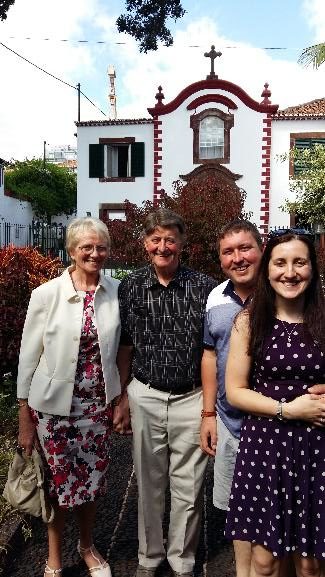
Two special couples attended the English Mass here at the Chapel last Sunday. At the end of Mass both approached Fr. Bernardino for a special blessing.

The older couple, Arthur & Margaret, informed that they had been married for 57 years. The younger couple, Jacinta & Declan, for only one week! They had been married a week earlier in Ireland.

Declan, the younger husband said «We need to talk with them». And they did. The piece of advice that Arthur, the older husband, gave to the younger was very simple and according to him was the “secret” of their very successful marriage. It is very inspiring advice, and it also applies for every relationship and it is very simple. Here it is: «Forget everything you learned until now about Marriage. Just keep this piece:

“BE GOOD TO EACH OTHER”. »wedding_image

wedding_image1

FROM MY HEART TO YOUR HEART – A Prostitute becomes a Nun

Brought to you by Fr. Bernardino Andrade

Lise, an English army girl, falls on hard times and becomes a prostitute after the liberation of Paris in World War II. Within a short time, she becomes the leading Madame in one of Paris’ smartest brothels owned by a man named Patrice. But Patrice soon tires of Madame Lise as his mistress and she is humiliated. In trying to help a younger prostitute escape from the same fate she suffered, Lise shoots and kills Patrice. So she is sent to prison where she meets the French Dominican Sisters of Bethanie.
The French Dominican Sisters of Bethanie is a community dedicated to serving prostitutes, drug addicts and vagrants; some of the sisters were once themselves such unfortunates.
Lise becomes one of the Sisters of Bethanie. Sister Lise is a prototype of the lost sheep, the lost coin and the lost son (Lk 15). God’s Grace is greater than our sins.
The story of the Good Shepherd, told by Jesus, is a «scandalous» story. In the Religious Community of Bethany there are former prostitutes, drug addicts and dirty homeless who became nuns, passionately in love with Jesus and His project. Only love, not cruel rules, are able to save and free people from their miseries and their sins and restore their dignity.

My friend Claudia Silva (Rosario Santos’ daughter) told me during supper at her mother’s house:
– « If you tell a homeless, a drug addict, a prostitute, a robber, a murderer, a sexual abuser: “You have dignity, you are beautiful, there is hope for you, heaven is waiting for you, you deserve to be happy and make other people happy, the world needs you because you are a human being and you have many talents, there’s a special place reserved in heaven for you, because God loves you without any conditions.”, he/she will not believe you; But if you treat him/her like an animal and say: “You are no more than a piece of garbage, hell is waiting for you, you deserve all the suffering you got because it is all your fault, all the world wants you to be dead, all the ‘good’ institutions are tired of you and would be happy to get rid of you.”, he/she will believe you. ».

« God so loved the world that he gave his only son, so that everyone who believes in him may not perish but may have eternal life. » (John 3: 16).
« The biggest atheist is not the one who says he doesn’t believe in God. The biggest atheist is the one who doesn’t believe that God is able to change the heart of a person. » (L. Évely)

In the eyes of God there are no lost causes. «In the eyes of God there is not one irrecoverable human being.» (Pope Francis)

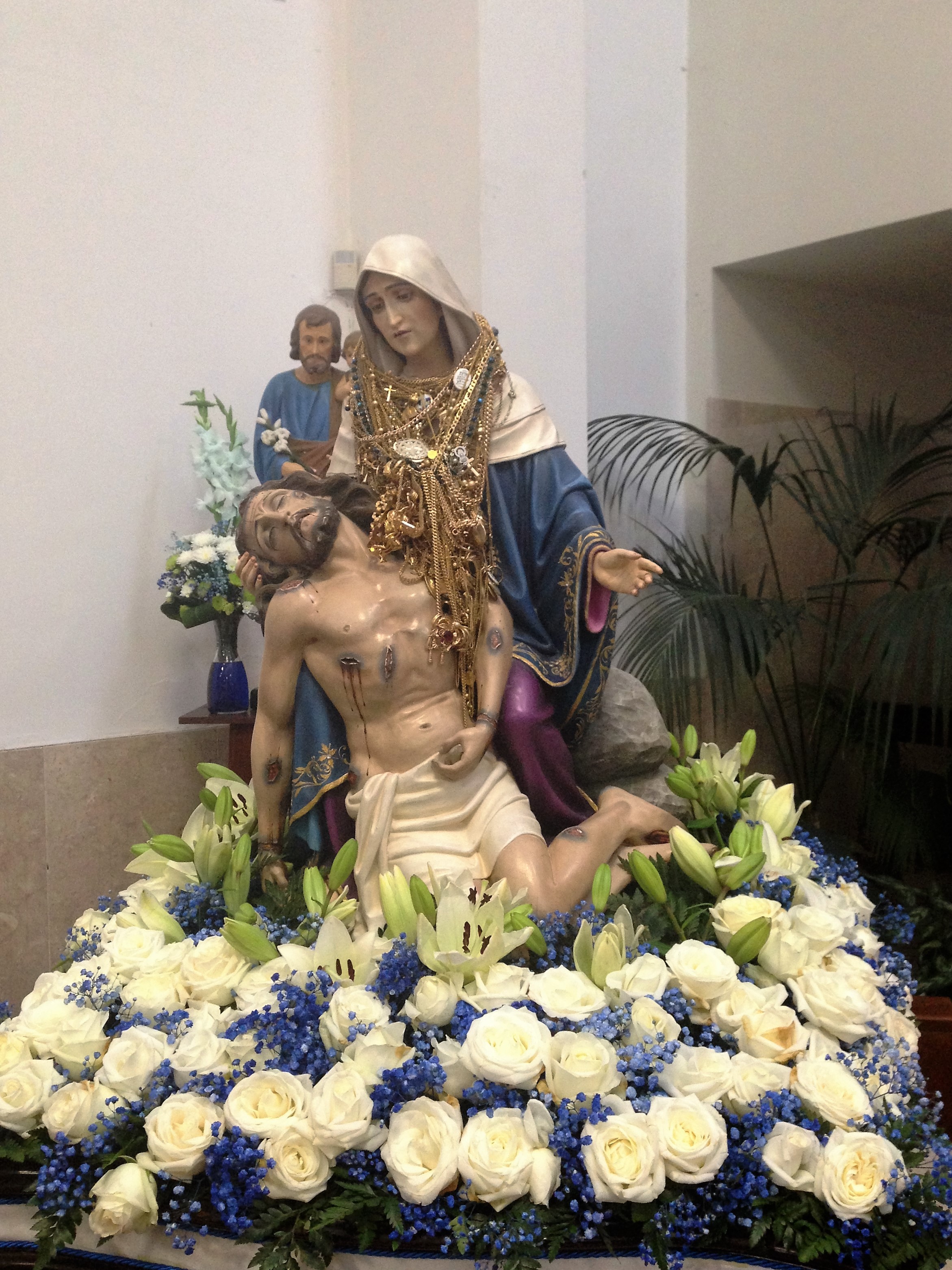
The Feast of Senhora da Piedade

img_0746
This week we are starting a new category in the blog section of our web site – “Religious Traditions of Madeira”. We will start with an article about the “Festa de Nossa Senhora de Piedade” which takes place on the third weekend of every September, which I took part in the for the first time this weekend (17th – 18th September).

On the Saturday of the feast, the fishing boats proceed in flotilla from the harbour in Caniçal to fetch the statue of Our Lady which resides in the Capela da Senhora da Piedade located on Monte Gordo. This chapel is found some kilometres away from the fishing village of Caniçal. The fishing boats are open to the public free of charge, and hordes of people clamber on to the boats in great spirits to take part in the festivities. The boats are decorated with palms and rosettes, with the lead boat, which is to carry the statue back, more highly decorated than the rest. My friends and I were lucky to get into one of the boats which was not quite so full as some of the others which had standing room only. I must say the excursion is not for the faint hearted!

After some time chugging around the harbour in Caniçal we proceeded on our way to the Quinta de Lourdes. It was a beautiful, sunny day and the sea was very calm. When we reached Quinta de Lourde, all the boats apart from the lead boat proceeded towards the São Lourenço point of the island and then anchored. Sandwiches and cool drinks were handed out free of charge. On some of the boats rope ladders were let down into the sea and people proceeded to dive in. On our boat one lad dived into the sea while the boat was still on the move and was hauled back in when he had finished! The whole event is marked by a happy go lucky attitude rather than strict attention to regulations, although the marine police were actively patrolling on speed boats, in case anyone got into difficulties.

With the statue of Our Lady safely on board we all then proceeded back to Caniçal. The whole excursion lasted about four hours. The statue is taken to the church in Caniçal where it resides overnight and is then taken on the next day back to the Chapel of Senhora de Piedade by sea once again.

This popular feast, and indeed the building of the chapel of Senhora de Piedade , is said to have its origens in a storm at sea when the fishermen at sea, who had been praying to our Lady, decided to build the chapel in thanks for their safe deliverance. According the the historian João Adriano Riberio (author ot the work “Excursions in Madeira (1891)) until the 19th century the procession took place by land and after which the marine procession became popular.

img_0745img_0711

Scripture Readings 25th September 2016, 26th Sunday in Ordinary Time, Year C

Amos 6:1, 4-7, Ps 145:6-10,1 Tim 6:11-16, Lk 16:19-31

Amos warns both the northern kingdom, Israel, ie Samaria, and the southern kingdom, Judah, with its capital Zion or Jerusalem, that the idle rich in both kingdoms will be the first to go into exile. 40 years later, in 721 BC, Samaria was conquered, and later Judea followed into exile.
The Psalm, echoed by Mary in Luke’s Magnificat, confirms that God’s justice will prevail: the hungry will be fed, the blind given sight, but the wicked will lose out. The Gospel graphically illustrates this theme: the rich man, who is not named, asks that the poor man – who is named – Lazarus – be sent to relieve his torments in hell. Abraham tells him the rich should listen to the prophets.
Instructing Timothy how to organise the early Christian church, Paul also insists the rich should use their wealth for good deeds. Christians should ideally aspire to show all the Christian virtues as examples to all, and so witness to the truth, until our Lord Jesus Christ returns to appear in glory as King of kings. And Paul insists that only God “has immortality”: we do not simply have souls that live on after death – our creed says we believe in “the resurrection of the body”, a gift from God in which our whole person, body and soul, lives for ever.

Psalm Response: My soul, give praise to the Lord.

(Amos 6:1, 4-7, Ps 145:6-10,1 Tim 6:11-16, Lk 16:19-31)

FROM MY HEART TO YOUR HEART – Bread With My Brother

– Brought to you by Fr. Bernardino Andrade

Under the umbrella of the « People Helping People » project, a new service was born at the Penha de França Chapel on the past June 12. It is called « Bread With My Brother ».

Initially it was called « The Back Door Ministry », and the goal was to offer a good hot meal to the homeless at least once a week; meals which would be provided by different restaurants. But then we thought that « Bread to My Brother » would be easier to understand. But that would mean a “we” and a “you” and not an “us” coming all together. And of course, that “we” and “you” would mean promoting social inequality. We realized that, even with good intentions, we would be building walls instead of bridges. So, finally, we made another change: the service would now be called « Bread With My Brother ».
Everyone is invited. Tourists are invited to eat with the homeless. The English speaking people are invited to eat side by side with the Portuguese speaking people. – No strings attached. No special collections, no boxes or bags passing around.
Different restaurants and different people are willing to share their food with this service that intends to bring together people from different social classes, different languages and different creeds.

  The meal is being served every Saturday in the Social Room of the Penha de França Chapel, at 1:00 PM. Please join us. If you are afraid of the homeless and the needy, please hug them like St. Francis did with the leper.

God loves you and so do I,
Fr. Bernardino Andrade

Scripture Readings 18th September 2016, 25th Sunday in Ordinary Time, Year C

Amos 8:4-7 Ps 112:1-8 1 Tim 2:1-8 Lk 16:1-13

Amos was a shepherd from Judah who around 760 BC prophesied doom to the northern kingdom Israel, largely because of its social injustice. Israel under Jeroboam was very prosperous, but when it was overrun by Assyria 40 years later the prophet’s warnings were remembered. Natural disasters should have reminded them of their dependence on God. It was not just the ways the rich cheated the poor – inflating the currency and giving short measure. Worse was their belief that sacrifices and fasting would absolve them from God’s blame: sacrifice without justice is meaningless. The Psalm gives hope that the poor will be raised up.
In our modern liturgies we follow all of Paul’s advice to Timothy: we lift up our hands in the traditional manner to offer prayers of petition, intercession and thanks, and we pray for secular authorities – “so that we may live religious and reverent lives in peace and quiet”. And Paul tells us not to be attracted to false gods like riches or possessions: there is only one God, and Christ Jesus, our one High Priest, is the only mediator between us and God.
In the Gospel Jesus also warns us not to be seduced into worshipping money. He still describes the steward as “dishonest”, but his motive was right: to gain friends who would help him later.

Psalm Response: Praise the Lord, who raises the poor.