From My Heart to Your Heart – Having Lunch with God

Brought to you by Fr. Bernardino Andrade

There once was a little boy who wanted to meet God. He knew it was a long trip to where God lived, so he packed his suitcase with Twinkies and a six-pack of root beer and started his journey.

When he had gone about three blocks, he met an old woman. She was sitting in the park just staring at some pigeons. The boy sat down next to her and opened his suitcase. He was about to take a drink from his root beer when he noticed that the old lady looked hungry, so he offered her a Twinkie. She gratefully accepted it and smiled at him. Her smile was so pretty that the boy wanted to see it again, so he offered her a root beer. Once again she smiled at him. The boy was delighted!

They sat there all afternoon eating and smiling, but they never said a word.

As it grew dark, the boy realized how tired he was, and he got up to leave; but before he had gone more than a few steps, he turned around, ran back to the old woman and gave her a hug. She gave him her biggest smile ever.

When the boy opened the door to his own house a short time later, his mother was surprised by the look of joy on his face. She asked him, “What did you do today that made you so happy?” He replied, “I had lunch with God.” But, before his mother could respond, he added, “You know what? She’s got the most beautiful smile I’ve ever seen!”

Meanwhile, the old woman, also radiant with joy, returned to her home. Her son was stunned by the look of peace on her face; and he asked, “Mother, what did you do today that made you so happy?” She replied, “I ate Twinkies in the park with God.” But, before her son responded, she added, “You know, he’s much younger than I expected!”

It is so easy and so rewarding to have lunch with God.

Life is about looking around with the eyes of our hearts to meet and have lunch with God.

God loves you and so do I,
 

Scripture Readings 11th December 2016, 3rd Sunday of Advent, Year A

Isaiah 35:1-6,10; Psalm 145; James 5:7-10; Matthew 11:2-11

To encourage and console all whose confidence in God falters, Isaiah continues his triumphal vision of the peace that will come from God, when those ransomed by the Lord will go to Zion, singing God’s praises. It was written in Babylon shortly after 540 BC, when the Persian king Cyrus had unexpectedly authorised Jewish exiles to return to Jerusalem. Isaiah’s portrayal of the people’s expectant joy was later seen by Christians as describing their expectation of the peace Jesus Christ will bring to all people.

The letter attributed to James, probably the brother of the Lord, the leader of the Jerusalem Church, was written late in the first century. It is full of pastoral advice and warnings against riches and presumption. Religion is not a private matter – the Christian community is in a covenant relationship with God, and our faith in God must be visible in love of our neighbour. So we must persevere patiently in practising our faith, not swearing but letting our “yes” mean “yes”, leaving justice to God.

In Matthew’s Gospel Jesus fulfills Isaiah’s vision – he is already enabling the blind to see, the lame to walk – his kingdom is already coming into being. But this deputation from John the Baptist in prison introduces two chapters describing growing opposition to Jesus by the Jewish leaders.

Psalm Response: Come, Lord, and save us.

Isaiah 35:1-6,10; Psalm 145; James 5:7-10; Matthew 11:2-11

Scripture Readings 4th December 2016, 2nd Sunday of Advent, Year A

Isaiah 11:1-10; Psalm 71; Romans 15:4-9; Matthew 3:1-12

The readings for Advent from Isaiah continue with his description of the ideal king, who will come from the remnant of Israel – the stump of Jesse, of David’s dynasty. Much quoted by Christian New Testament writers and applied to Jesus. But Isaiah was seeking to comfort his people, under attack by Assyria, and he goes on to foresee a fantastic and idyllic future when the whole of creation will live in complete harmony. No human king could achieve this, but the “fear of the Lord” and the “knowledge of the Lord” would bring it about.

Paul’s letter to the Romans exhorts the two groups of Christians in Rome to work patiently together, ignoring varying degrees of conformity to the Jewish Law. We must learn about God from the Jewish Scriptures, the Old Testament, so that we may worship him in unity of mind and mouth. The sufferings of both the Messiah and of Israel demonstrate that God keeps His promises, and the Messiah will lead all nations, both Jews and Gentiles, to praise God.

In the Gospel John the Baptist, the last prophet of the Old Testament, prepares the way of the Lord by urging people to repent, to turn towards God from their sins. But he condemns those who say they have no need of God.

Psalm Response: In his days justice shall flourish and peace till the moon fails.

FROM MY HEART TO YOUR HEART – An “Idiot” Old Man Reciting His Rosary

FROM MY HEART TO YOUR HEART – An “Idiot” Old Man Reciting His Rosary
– Brought to you by Fr. Bernardino Andrade

A train was racing for Paris.

In one of its compartments two men sat opposite each other. The first was a young medical research student who was bored by the long journey. The other was an old man reciting his rosary with closed eyes.
The young researcher began to ridicule the old man for his superstitious beliefs. He then went on to tell of the wonders of medical science. The old man just nodded, smiled and continued his prayer in spite of the humiliating comments of his fellow passenger.

When they reached the Paris station, the old man enquired where the youngster was going. The young man proudly announced that he was going to attend a lecture by the world famous scientist, Louis Pasteur. The old man took out a visiting card from his pocket, gave it to the young man and bid him farewell.

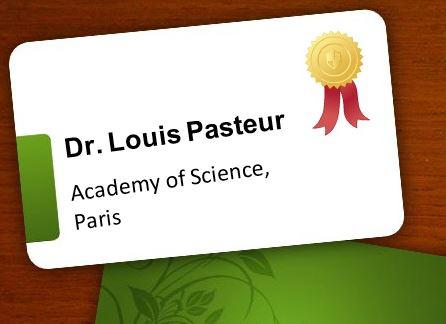
The card read:
card
« Dr. Louis Pasteur
Academy of Science
Paris »

God loves you and so do I,
Fr. Bernardino Andrade

Scripture Readings 27th November 2016, 1st Sunday of Advent, Year A

Isaiah 2:1-5; Psalm 121; Romans 13:11-14; Matthew 24:37-44

During advent the first readings are from first Isaiah, mostly written before 700 BC, a period when Israel was under attack from Assyria. Isaiah is critical of attempts by Israel’s kings to control their destiny – he urges them to place their faith and trust in God, and in His promises to David, whose city of Jerusalem is where God dwells. But God will not necessarily protect Israel from its enemies, who might be the means God uses to cleanse the people.
Nevertheless there will be a remnant who will ensure the survival of the people, like a stump of a tree, from which will come an ideal ruler in the future. In today’s reading Isaiah looks forward to a peaceful time when all nations will be attracted by Israel’s behaviour to accept God’s authority, centred on Mount Zion in Jerusalem.
In his letter to the Romans Paul has been drawing out the implications of his image of Christians as all parts of one body. Since we are therefore dependant on each other we have a duty of love for each other. Judgement will come at any time, so we must live at all times as if all our actions are visible to all.
Matthew’s gospel reinforces the need to “stay awake”, ready for the Lord’s coming.

Psalm Response: I rejoiced when I heard them say: “Let us go to God’s house”.

Isaiah 2:1-5; Psalm 121; Romans 13:11-14; Matthew 24:37-44

Ceremony of Sending

ceremon_of_sending

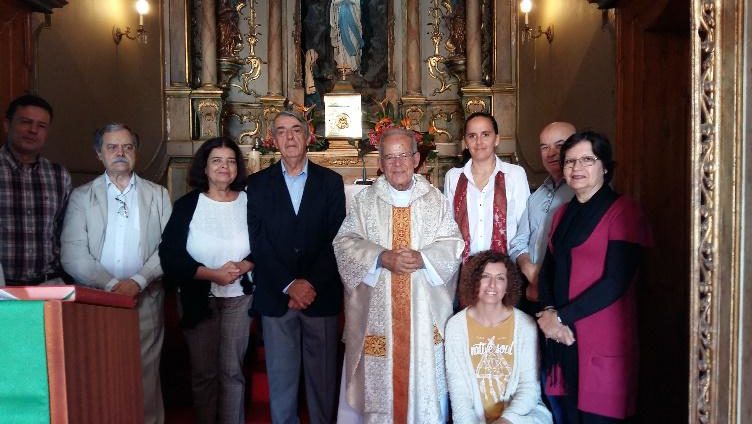
On Nov. 11, 2016 “PEOPLE HELPING PEOPLE” became an official Association. Last Sunday, on the Feast of Christ the King, the nine official leaders were anointed by Fr. Bernardino, with the oil of Sending.

FROM MY HEART TO YOUR HEART – A Taxi Driver at 2:30 AM

– Brought to you by Fr. Bernardino Andrade

In his book, “Make Me an Instrument of Your Peace”, Kent Nerburn writes about his experience driving a cab for living. He remembers one night in particular when he received a call at 2:30 AM to go to a small brick fourplex. Thinking he was going to pick up some late night partiers or someone who had just had a fight with his or her spouse, he was surprised when a small woman in her eighties answered the door.

She wore a print dress and an old fashioned pillbox hat. By her side was a small nylon suitcase. The apartment was empty, except for a few pieces of furniture covered with sheets and a cardboard box filled with photos and glassware. The driver picked up her bag and helped her to the cab. She gave him the address and then asked, “Could you drive through downtown?”. “It’s not the shortest way”, he answered. “Oh, I don’t mind”, she said. “I’m in no hurry. I’m on my way to a hospice. I don’t have any family left. The doctor says I don’t have very long.”

The driver reached over and shut off the meter. “What route would you like me to go?”

For the next two hours, they drove through the city. She pointed out the building where she worked as an elevator operator, the house where she and her late husband lived as newlyweds, the furniture store that was once a ball room where she had gone dancing as a girl. Sometimes she’d ask to slow down in front of a particular building or corner; there she’d just sit staring into the darkness, saying nothing. As the dawn broke over the horizon, she said, “I’m tired. Let’s go now.” They drove to the small house that served as the hospice. Two attendants came and helped her out of the cab and took her bag.

She asked the driver how much she owed for the fare. “Nothing “, he said. “But you have to make a living,” she insisted. “There are more passengers,” he replied.

Almost without thinking, he bent over and gave her a hug. She held him tightly. “You gave an old woman a little moment of joy,” she said. “Thank you”.
Then, in the dim morning light, he watched as she walked into the hospice.

***
Kent Nerburn remembers: “We are so conditioned to think that our lives revolve around great moments. But great moments often catch us unaware. When that woman hugged me and said that I brought her a moment of joy, it was possible to believe that I had been placed on earth for the sole purpose of providing her with that last ride. I do not think that I have done anything in my life more important”.

Scripture Readings 20th November 2016, Christ the King, Year C

2 Sam 5:1-3 Ps 121 Col 1:12-20 Lk 23:35-43

The Books of Samuel, with the Books of Kings and of Judges, tell of Israel’s history from when they entered Canaan about 1200 BC, up to their exile to Babylon in 587 BC. After the death of Saul, David became King of Judah. In today’s key reading David then becomes King of all Israel. He goes on to capture the 1,000 year-old city of Jerusalem, and makes it his capital. He then brings the Ark of the Covenant to Jerusalem, making it also Israel’s religious centre. The Psalm celebrates Jerusalem, David’s city.

The letter to the Colossians was written because they thought that angelic beings and other spiritual powers were either rivals to Christ or were needed to supplement Christ’s work. Paul says this detracts from the person of Jesus Christ, who possesses the totality of power needed for redemption, meaning the forgiveness of sins. The hymn praises Christ, who is the image of the unseen God. He existed before all things, which were created in him, and He is supreme over all creation. He has reconciled all things, the whole cosmos, by “the blood of the Cross”.

In Luke’s Gospel the crucified Jesus is recognised as King, both by the good thief and in the inscription written by Pilate, a Gentile.

Psalm Response: I rejoiced when I heard them say: “Let us go to God’s house”.

(2 Sam 5:1-3 Ps 121 Col 1:12-20 Lk 23:35-43)

RESTORATIVE JUSTICE – The potential for healing and true forgiveness

– Brought to you by Michael Hartnack

One of the most inspirational and humbling experiences I have recently experienced was yesterday when Yvonne, my wonderful partner and I, took up the invitation of Father Bernardino, given to us at last Sunday’s mass, to join local people from Madeira, as part of the People Helping People project. *
There we shared fine food, fellowship and very simple acts of generosity towards one another. Even where we didn’t understand each other’s language, a nod, a smile and reciprocated acts of kindness saw us through a truly amazing experience of what being a human being is all about.

Despite our differences in culture, language, customs and circumstances, our experience proved to me, that there is far more that joins us together, than could ever divide us. I will remain eternally grateful for the opportunity of having had such an experience.

Father Bernardino simply asked me what I did for a living. I told him that I retired some three years ago as a police Officer in England and now undertake work with victims of crime and their offenders, bringing them both together in a process we call restorative justice. The process of Restorative Justice, allows for harm caused to the victim to be repaired by the offender through a quite simple method but which needs to be skillfully facilitated. For the vast majority of crimes, a civilised society must have the capacity to integrate its wrongdoers back into society, otherwise, like Zacchaeus (from the Bible story), such people would always be on the periphery of society, never accepted, never given the opportunity to make a contribution.

This is not necessarily about forgiveness; it is more about repairing properly the harm that has been caused. It’s called Restorative Justice. It is not about avoiding Justice – many of the offenders I work with are imprisoned for their offending, and rightly so, but the process provides the opportunity for the victim to face their offender and explain the impact that the behaviour of the offender has had on their victim. The criminal behaviour on victims and others is addressed and helps offenders who might never have otherwise had the opportunity, to face a victim and hear first hand the impact of their behaviour.

British courts don’t address this issue and are ordinarily powerless to impose true restorative justice – the repairing of the relationship between two human beings – putting right the real harm that has been caused. Instead, the courts consider all cases to be crimes against the state and have done so for many, indeed far too many years.

Restorative Justice is about facing up to and explaining what one has learnt as a consequence of causing someone harm. Perhaps it goes some way to helping someone on their way to reparation and perhaps even, as I have personally experienced, true forgiveness occurring between two human beings.

Thank you for listening. – Michael Hartnack – 30 October 2016

(Original text edited and shortened for this issue of Joyful Gift). More information on the Restorative Justice program can be found at: www.restorativesolutions.org.uk/

FROM MY HEART TO YOUR HEART – Death Teaches Us How to Live – I

– Brought to you by Fr. Bernardino Andrade

It´s the name of a book: « Death teaches us how to live ».
As Vice-President, George Bush represented the U.S. at the funeral (November 15, 1982) of former Soviet leader Leonid Brezhnev who had been the president of the USSR for 18 years. Bush was deeply moved by a silent protest carried out by Brezhnev’s widow, Mrs. Viktoria Brezhnev.

She stood motionless by the coffin until seconds before it was closed. Then, just as the soldiers touched the lid, Brezhnev’s wife performed an act of great courage and hope, a gesture that must surely rank as one of the most profound acts of civil disobedience ever committed: she reached down and made the sign of the cross on her husband’s chest.

There in the citadel of secular, atheistic power, the wife of the man who had run it all hoped that her husband was wrong. She hoped that there was another life, that that life was best represented by Jesus who died on the cross, and that the same Jesus might yet have mercy on her husband.

Death teaches us how to live.
God loves you and so do I,
Fr. Bernardino Andrade (bernardinodandrade@gmail.com)